

Sciatica is one of the most common reasons people seek physiotherapy — and one of the most misunderstood. If you have been experiencing a sharp, burning, or shooting pain that travels from your lower back down through your buttock and into your leg, you may be dealing with sciatica. The discomfort can range from a mild ache to severe pain that makes sitting, standing, or walking difficult.
At Physio Village, our registered physiotherapists work with patients across Brampton and Oakville who are living with sciatica. This guide explains what sciatica is, what causes it, how to recognize the signs, and what treatment options may help you move better and hurt less.
What Is Sciatica?

Sciatica refers to pain that follows the path of the sciatic nerve — the longest and widest nerve in the human body. The sciatic nerve originates in the lower spine, travels through the buttock, and branches down each leg to the foot. When this nerve becomes compressed, irritated, or inflamed, it can produce the characteristic radiating pain known as sciatica.
It is worth noting that sciatica is a symptom, not a diagnosis on its own. Something is causing the nerve to be irritated, and identifying that underlying cause is the first step toward effective treatment.
What Does Sciatica Feel Like?
Sciatic nerve pain typically affects one side of the body. Patients often describe the sensation in different ways:
- A sharp, shooting pain that travels down the leg
- A burning or tingling sensation along the leg or foot
- Numbness or weakness in the leg, knee, or foot
- Pain that worsens with prolonged sitting or sudden movement such as sneezing or coughing
- Difficulty standing up from a seated position
Symptoms can vary considerably from person to person. A physiotherapist can assess your symptoms to help determine whether sciatica is likely and what may be driving it.

Common Causes of Sciatica
Sciatica occurs when something presses on or irritates the sciatic nerve. Some of the most frequently identified causes include:
Herniated or Bulging Disc
One of the leading causes of sciatica is a herniated disc in the lumbar spine. When the soft inner material of a spinal disc pushes out through the tougher outer layer, it can press directly against the sciatic nerve roots.
Lumbar Spinal Stenosis
Spinal stenosis involves a narrowing of the spinal canal, which can place pressure on the nerves within. This is more common in adults over 50 and often causes sciatica-like symptoms that worsen with standing or walking and ease with sitting or leaning forward.
Piriformis Syndrome
The piriformis is a small muscle in the buttock through which the sciatic nerve passes (or in some people, runs directly through). When the piriformis becomes tight or inflamed — often from overuse, prolonged sitting, or hip imbalances — it can compress or irritate the sciatic nerve.
Degenerative Disc Disease
As the discs between vertebrae gradually wear over time, the spacing between vertebrae decreases. This can lead to nerve compression and sciatic symptoms, particularly in people who perform repetitive physical labour or who have had previous back injuries.
Other Contributing Factors
- Spondylolisthesis (a vertebra slipping out of position)
- Pregnancy, due to changes in weight distribution and pelvic alignment
- Poor posture and prolonged sitting
- Muscle imbalances in the core, hips, and lower back
Signs of Sciatica — When to Seek Assessment
Many people live with low-grade sciatic discomfort and do not seek help until pain becomes severe. However, early assessment is generally more effective than waiting. Consider booking an assessment if you notice:
- Persistent pain in one side of the buttock or leg lasting more than a few weeks
- Pain that is worsening rather than improving with rest
- Numbness, tingling, or weakness in the lower limb
- Difficulty controlling your bladder or bowel (this requires urgent medical attention — please seek emergency care immediately in this case)
Most cases of sciatica do not require surgery. A physiotherapist can assess your symptoms, identify likely contributing factors, and develop a treatment approach tailored to you.
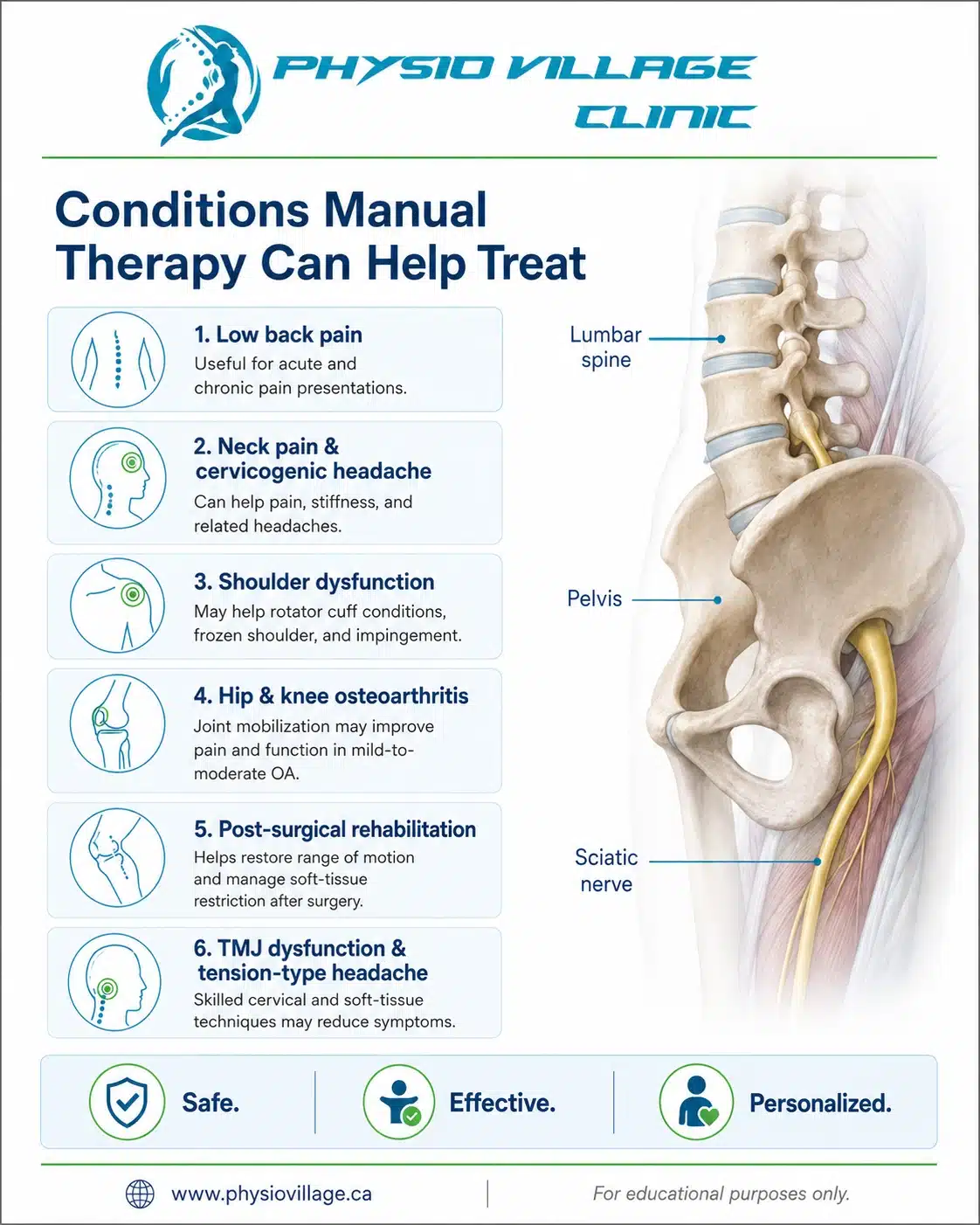
How Physiotherapy May Help with Sciatica
Physiotherapy is often recommended as a first-line approach for sciatica management. At Physio Village, treatment is not one-size-fits-all. Following your initial assessment, your registered physiotherapist will determine which combination of approaches may be most appropriate for your presentation.
Physiotherapy for sciatica may include:
- Manual therapy — Hands-on techniques such as joint mobilization and soft tissue release may help reduce pressure on the sciatic nerve, improve lumbar mobility, and ease muscle tension in the surrounding area.
- Nerve mobilization (neural flossing) — Specific movement techniques that help the sciatic nerve glide more freely through surrounding tissues, which may reduce nerve sensitivity and improve movement range.
- Therapeutic exercise — A guided program targeting the muscles that support your lumbar spine, hips, and pelvis. Strengthening and lengthening the right muscle groups can help reduce nerve irritation over time.
- Posture and movement education — Learning how to position your body correctly during daily activities — sitting, lifting, sleeping — can reduce ongoing nerve compression and support recovery.
- Modalities — Depending on your assessment, your physiotherapist may use ultrasound, TENS, or heat and cold therapy as part of a broader treatment plan.
What to Expect at Your First Appointment
Your first visit to Physio Village will begin with a comprehensive assessment. Your physiotherapist will take time to understand your history, the nature and location of your pain, and how it is affecting your daily life. This typically involves:
- A detailed discussion of your symptoms and health history
- Physical testing including range of motion, strength, and neurological screening
- Postural and movement analysis
- A clear explanation of findings and a proposed treatment plan
You will leave your first appointment with a better understanding of what may be causing your symptoms and a clear plan for next steps.
Sciatica Treatment in Brampton and Oakville
Physio Village serves patients across Brampton and Oakville who are dealing with sciatic nerve pain. Whether your sciatica has come on suddenly or been building for months, our team is here to support your recovery at a pace that is right for you.
We offer flexible appointment times and a welcoming, patient-centered environment where your concerns are heard and your progress is monitored throughout your care.
Ready to Address Your Sciatica? Book an Assessment Today
If sciatic nerve pain is limiting your daily activities, a physiotherapy assessment can be a helpful first step. Book an appointment at Physio Village in Brampton or Oakville, and let our registered physiotherapists help you understand what is happening and what options may support your recovery.
Book Your Assessment
FAQ: Sciatica
Q1: How long does sciatica typically last?
The duration of sciatica varies depending on the underlying cause and individual factors. Mild cases may improve within a few weeks, while more persistent cases can take several months. Early physiotherapy assessment may support a faster, more effective recovery. Your physiotherapist can give you a more realistic timeframe based on your individual presentation.
Q2: Is bed rest recommended for sciatica?
In most cases, prolonged bed rest is not recommended. Staying gently active — within your pain tolerance — is generally better for sciatic nerve recovery than extended rest. Your physiotherapist can advise on appropriate movement and activity levels for your specific situation.
Q3: Can sciatica go away on its own?
Some cases of sciatica do resolve without intervention, particularly when the cause is temporary. However, without addressing the underlying contributing factors, symptoms may return. Physiotherapy may help reduce the likelihood of recurrence by identifying and treating the root cause.
Q4: Do I need an MRI or X-ray before starting physiotherapy?
Not necessarily. Physiotherapists are trained to assess sciatica clinically, and imaging is not always required before beginning treatment. If your physiotherapist suspects a structural issue that requires imaging to confirm, they can recommend this and coordinate care with your physician.
Q5: Can sciatica cause permanent nerve damage?
In rare cases, severe or prolonged nerve compression can lead to lasting changes. This is why prompt assessment is important, especially if you are experiencing weakness or changes in bladder or bowel control. These symptoms warrant urgent medical attention.
Q6: Is physiotherapy safe for sciatica during pregnancy?
Sciatica is common during pregnancy due to changes in posture and the added weight pressing on the lower spine. Physiotherapy can be appropriate during pregnancy, but your physiotherapist will adapt techniques to ensure safety. Please inform your physiotherapist if you are pregnant.
Book an in-clinic assessment
Oakville Clinic: Book Oakville Clinic
Brampton Clinic: Book Brampton Clinic