
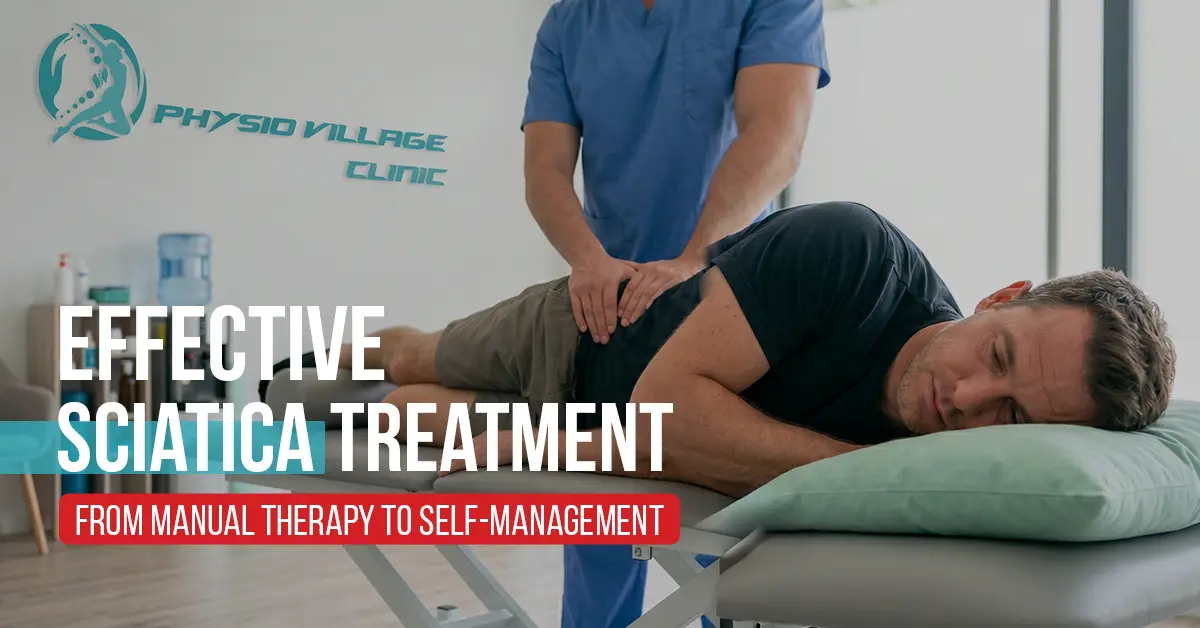
Finding the right sciatica treatment can make a meaningful difference in how quickly you recover and whether your symptoms return. Sciatica pain — that radiating discomfort that runs from the lower back through the buttock and down the leg — can be disruptive to work, sleep, and daily movement. The encouraging news is that most cases of sciatica respond well to conservative care, particularly physiotherapy.
At Physio Village, our registered physiotherapists in Brampton and Oakville use a combination of hands-on treatment, targeted exercise, and patient education to support sciatica recovery. This article outlines the evidence-informed approaches we use and what you can expect from the process.

Why Treatment Matters — Not Just Rest
One of the most common misconceptions about sciatica is that rest will resolve it. While some rest may be appropriate in the early, acute phase, prolonged inactivity can actually worsen outcomes. The tissues surrounding the sciatic nerve can become stiffer, surrounding muscles can weaken, and the nerve itself may become more sensitized.
Evidence-based sciatica treatment focuses on reducing nerve irritation, restoring movement, and building the strength and awareness needed to prevent recurrence.
Physiotherapy-Based Sciatica Treatment Options
No two patients with sciatica present the same way. The approach at Physio Village begins with a comprehensive assessment to understand the likely cause of your nerve irritation and your current functional limitations. Treatment is then tailored accordingly.
Manual Therapy
Manual therapy involves hands-on techniques applied by a trained physiotherapist. For sciatica, this may include:
- Lumbar joint mobilization — Gentle, guided movement of the spinal joints to reduce stiffness and decompress nerve structures
- Soft tissue release — Targeted pressure applied to tight or overactive muscles in the lower back, glutes, and hip area
- Myofascial techniques — Addressing restrictions in the connective tissue that surrounds the muscles and nerves
Manual therapy for sciatica is not about cracking or forceful manipulation. It is precise, purposeful, and always informed by your assessment findings.
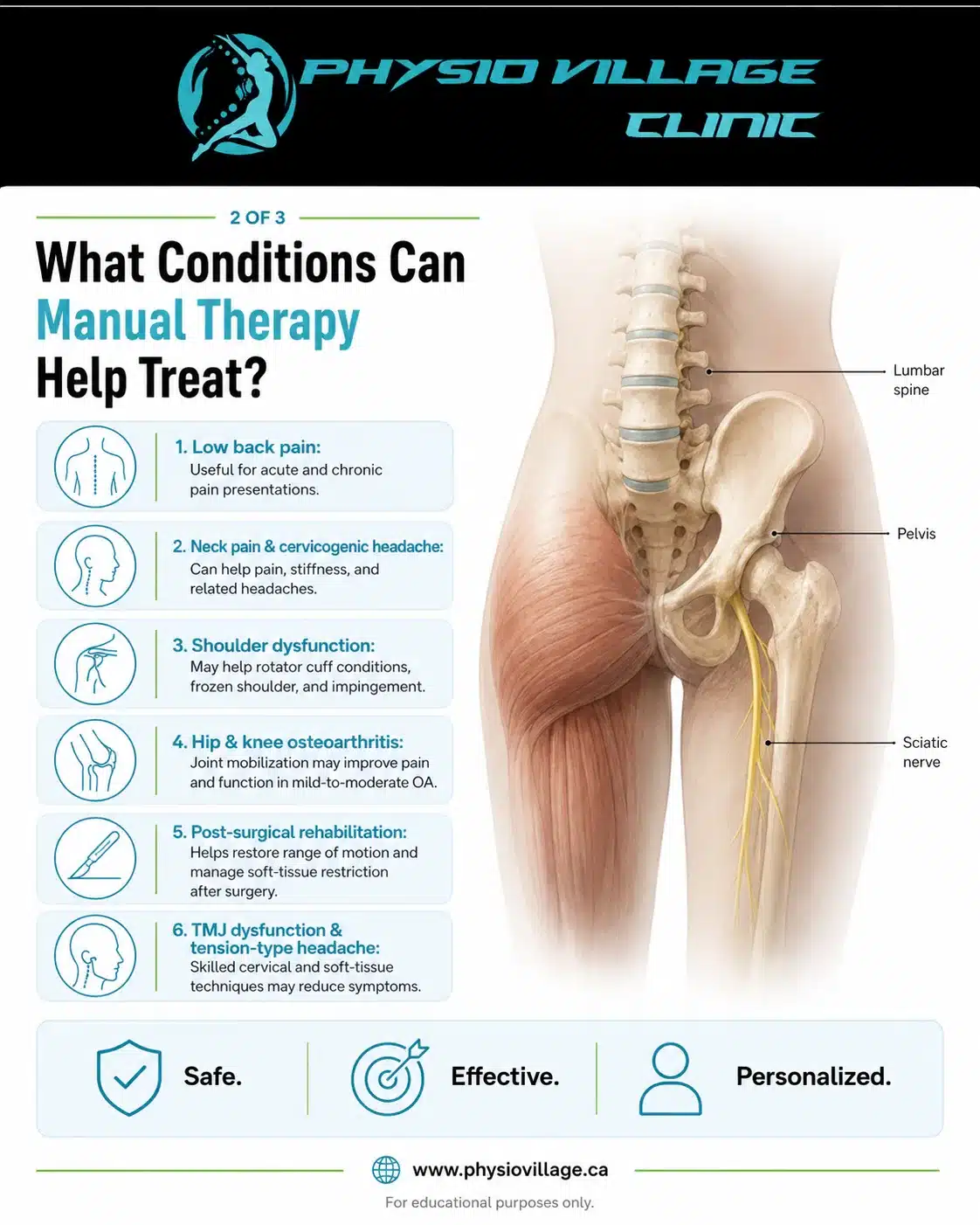
Nerve Mobilization (Neural Flossing)
Nerve mobilization is a specific technique used when the sciatic nerve has become restricted or “stuck” in the surrounding tissue. The goal is to help the nerve glide more freely, which may reduce tension, sensitivity, and radiating pain.
These techniques involve carefully guided movements that produce a gentle stretch-and-release effect along the nerve pathway. They are often prescribed as part of your home exercise program as well.
Sciatica Exercises
Therapeutic exercise is a central component of sciatica recovery. Your physiotherapist will design a program based on your specific presentation. Common objectives include:
- Reducing compression on the sciatic nerve
- Strengthening the deep core and lumbar stabilizers
- Improving hip and glute strength to offload the lumbar spine
- Restoring full movement in the hips and lower back
Exercises are introduced progressively and adjusted as your symptoms change. You should not be doing exercises that significantly increase your pain.
Stretching for Sciatica Relief
Specific stretches can help reduce muscle tension that may be contributing to sciatic nerve compression. Areas commonly targeted include the piriformis, hip flexors, hamstrings, and lumbar extensors. Stretching is most effective when it is performed correctly and is appropriate for your type of sciatica — your physiotherapist will confirm which stretches are suitable for your presentation.
Postural and Movement Education
How you sit, stand, sleep, and lift can have a significant impact on sciatic nerve irritation. Your physiotherapist will work with you on:
- Ergonomic positioning for desk work and driving
- Safe lifting techniques
- Sleeping positions that reduce lumbar nerve compression
- Activity modification during flare-ups
This element of treatment is often underestimated but plays an important role in long-term outcomes.
Acupuncture for Sciatica
Acupuncture may be used as a complementary component of sciatica treatment for some patients. It is sometimes considered as part of a broader pain management approach, particularly when nerve sensitivity or chronic pain is a concern. Your physiotherapist can discuss whether this may be appropriate for you.
Non-Surgical Sciatica: What the Evidence Suggests
The majority of people with sciatica do not require surgery. Research consistently supports conservative care — including physiotherapy — as the appropriate first-line approach for most presentations of sciatica. Surgery is generally considered only after a sustained period of conservative treatment has not produced adequate improvement, or in cases involving significant neurological compromise such as weakness or loss of bladder and bowel control.
At Physio Village, our physiotherapists will be transparent about your prognosis and will recommend referral to your physician or a specialist if there are clinical reasons to do so.
How Long Does Sciatica Treatment Take?
Recovery timelines vary. Some patients notice meaningful improvement within a few weeks of beginning treatment; others require a longer, more graduated programmed. Factors that influence recovery include:
- The underlying cause of the nerve irritation
- How long symptoms have been present before treatment began
- Overall health, activity level, and adherence to the home exercise programmed
- The presence of any other contributing conditions
Your physiotherapist will give you realistic expectations based on your assessment findings and will reassess your progress regularly.
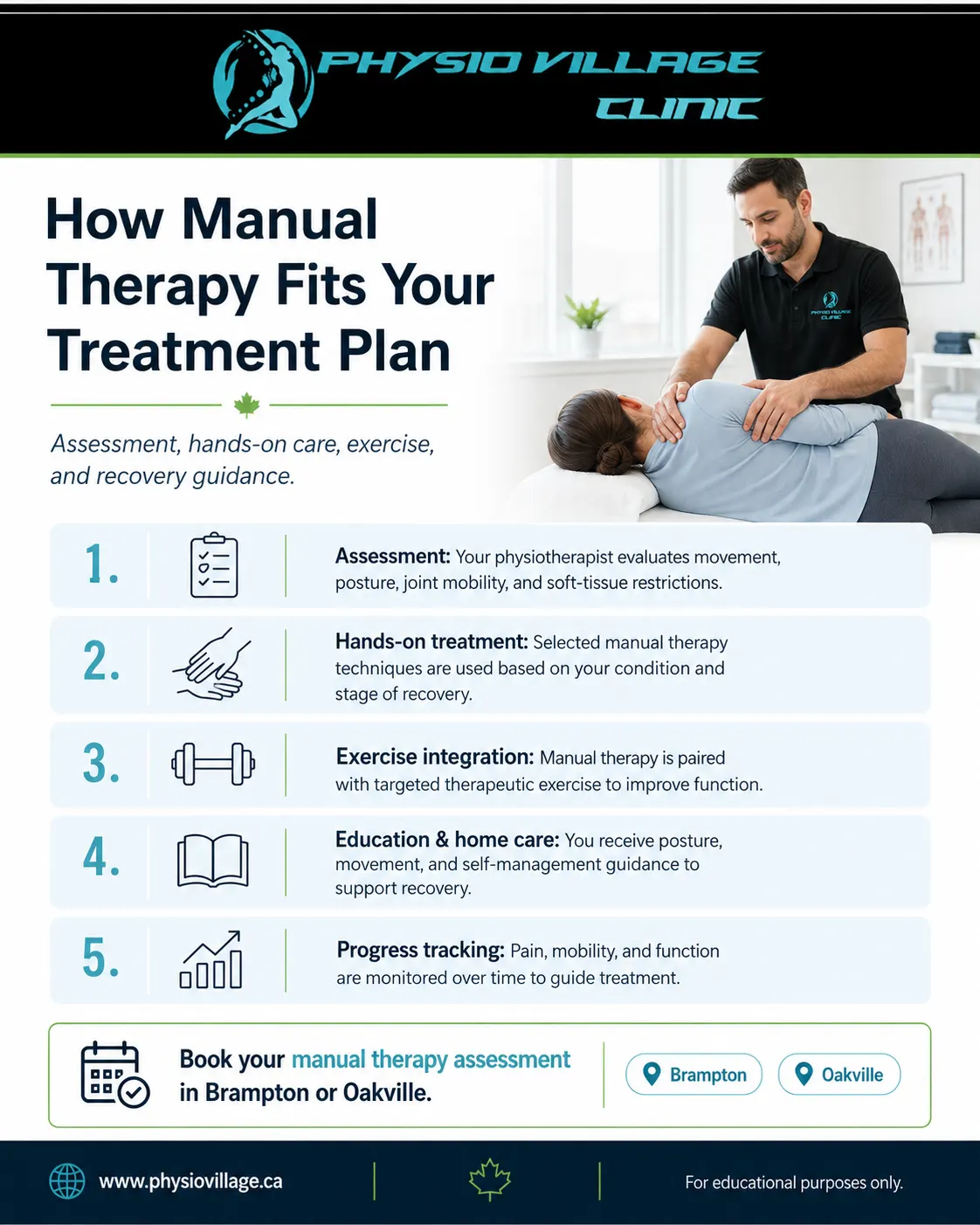
Sciatica Treatment in Brampton and Oakville
PhysioVillage offers evidence-informed physiotherapy for sciatica at our Brampton and Oakville clinics. Our registered physiotherapists take the time to understand your specific situation and build a treatment plan that fits your goals, your lifestyle, and your timeline.
Whether you are newly experiencing sciatic symptoms or have been managing chronic nerve pain for some time, we are here to help you move better and feel more in control of your recovery.
Book Your Sciatica Treatment Appointment
If sciatica is affecting your ability to work, move, or rest comfortably, physiotherapy may be a helpful next step. Book an appointment with a registered physiotherapist at Physio Village in Brampton or Oakville.
Book Your Appointment
Oakville Clinic: Book Oakville Clinic
Brampton Clinic: Book Brampton Clinic
FAQ: Sciatica Treatment
Q1: What is the most effective treatment for sciatica?
There is no single treatment that works for every case of sciatica. Physiotherapy — including manual therapy, targeted exercise, and nerve mobilization — is generally well-supported as an effective approach for most presentations. The most effective approach for you will depend on the underlying cause of your symptoms, which a physiotherapist can assess.
Q2: Should I do sciatica exercises even when I am in pain?
This depends on the nature and severity of your pain. Gentle, appropriate movement is generally encouraged, but exercises that significantly increase your pain should be avoided. A physiotherapist can advise you on which exercises are safe and appropriate during a flare-up.
Q3: Can sciatica come back after treatment?
Yes, sciatica can recur, particularly if the underlying contributing factors have not been fully addressed. This is why physiotherapy focuses not just on symptom relief, but also on building the strength, movement habits, and body awareness that reduce the likelihood of recurrence.
Q4: How many physiotherapy sessions will I need for sciatica?
The number of sessions depends on your individual presentation and how you respond to treatment. Your physiotherapist will give you a clearer estimate after your initial assessment, and will regularly reassess your progress.
Q5: Is physiotherapy for sciatica covered by insurance?
Many extended health benefit plans in Canada cover physiotherapy. It is best to check with your insurance provider regarding your specific coverage. Physio Village can provide receipts for reimbursement purposes.