
That sharp, stabbing pain in the heel when you take your first steps out of bed in the morning is one of the hallmark signs of plantar fasciitis — and it is far more common than many people realize. Plantar fasciitis is the leading cause of heel pain in adults, and while it can be persistent, it often responds well to appropriate physiotherapy treatment.
At Physio Village, our physiotherapists in Brampton and Oakville work with patients who are dealing with heel pain, foot stiffness, and the frustration of plantar fasciitis that limits running, walking, and everyday activity. This article covers what plantar fasciitis is, what causes it, and what treatment options may support your recovery.
What Is Plantar Fasciitis?
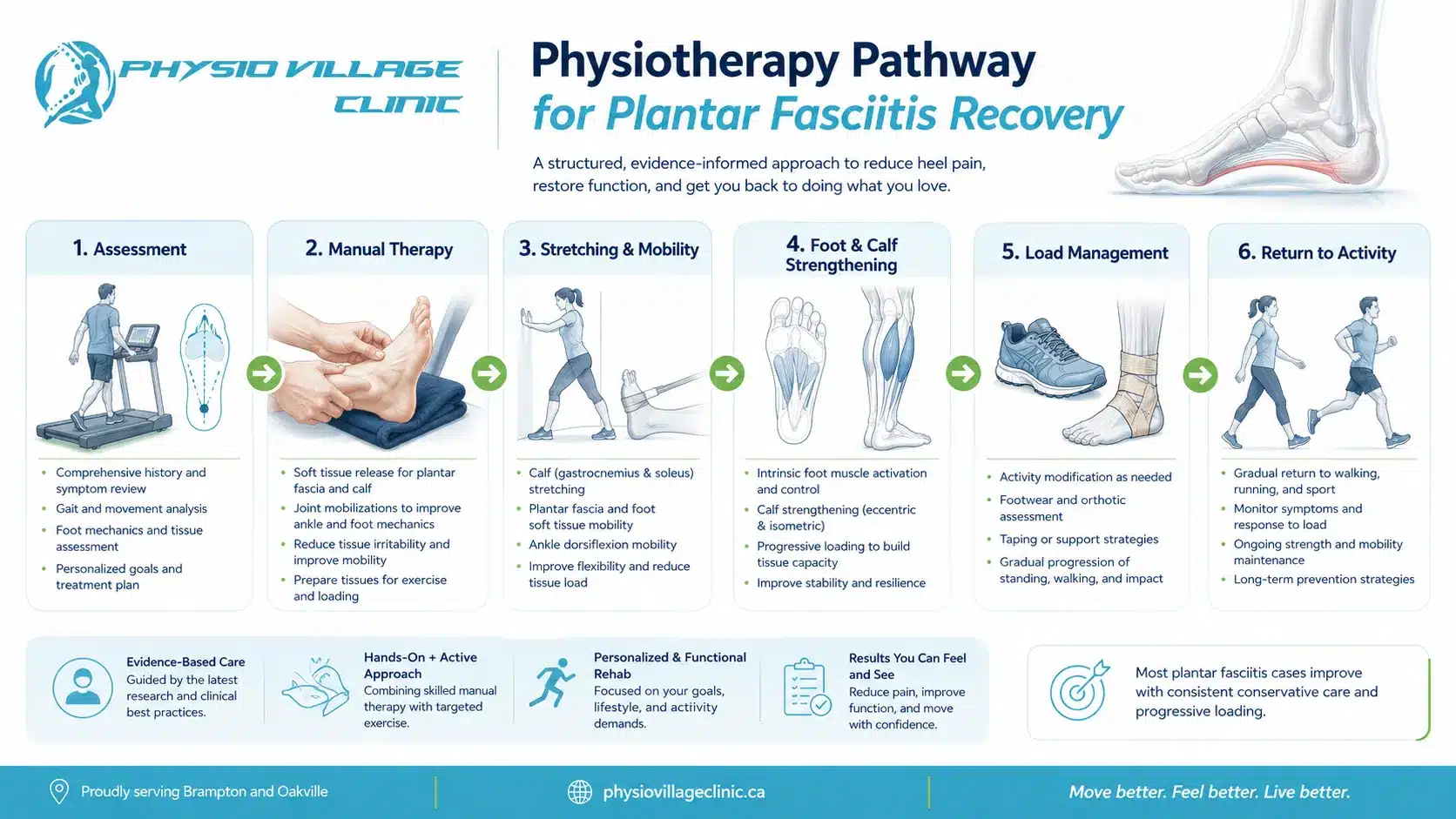
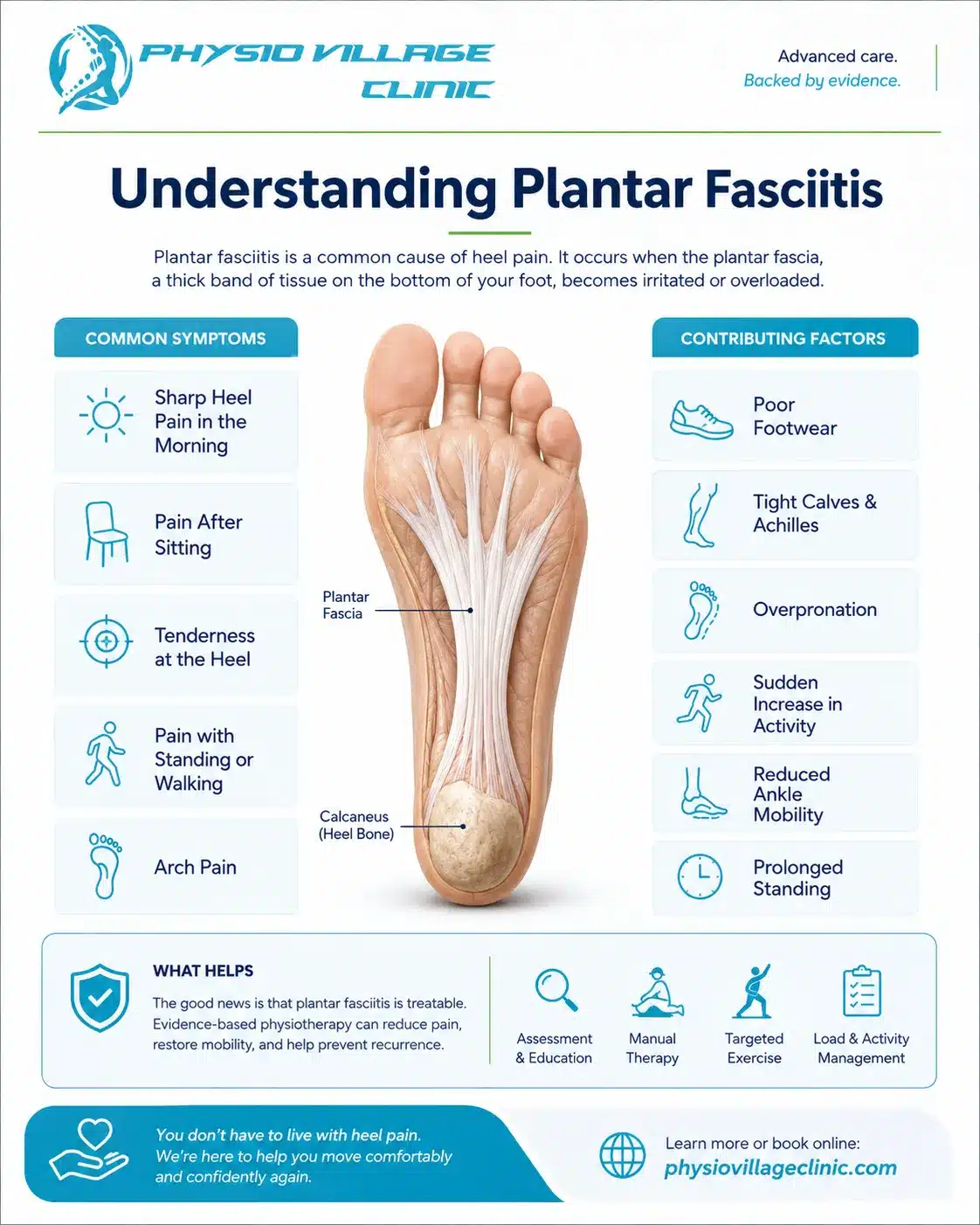
The plantar fascia is a thick band of connective tissue that runs along the bottom of the foot, connecting the heel bone (calcaneus) to the toes. It plays an important role in supporting the arch of the foot and absorbing impact during walking and running.
Plantar fasciitis occurs when the plantar fascia becomes irritated and inflamed — typically at or near where it attaches to the heel bone. This can result from repetitive stress that exceeds the tissue’s capacity to recover, leading to micro-damage and the pain response that follows.
Recognizing Plantar Fasciitis Symptoms
Plantar fasciitis has some fairly characteristic features that help distinguish it from other causes of heel or foot pain:
- Heel pain that is worst with the first steps of the day — The tissue shortens overnight, and loading it upon waking produces sharp pain that often eases after a few minutes of walking
- Pain after periods of rest — Returning to walking after sitting for a period often reproduces the pain
- Tenderness at the base of the heel — Particularly at the medial aspect of the calcaneus where the fascia attaches
- Pain that worsens with prolonged standing or walking
- Occasional arch pain along the bottom of the foot
Not all heel pain is plantar fasciitis. A physiotherapist can assess your foot biomechanics and determine whether plantar fasciitis is the most likely explanation, or whether another condition such as Achilles tendinitis, a heel spur, or nerve entrapment may be contributing.
What Causes Plantar Fasciitis?
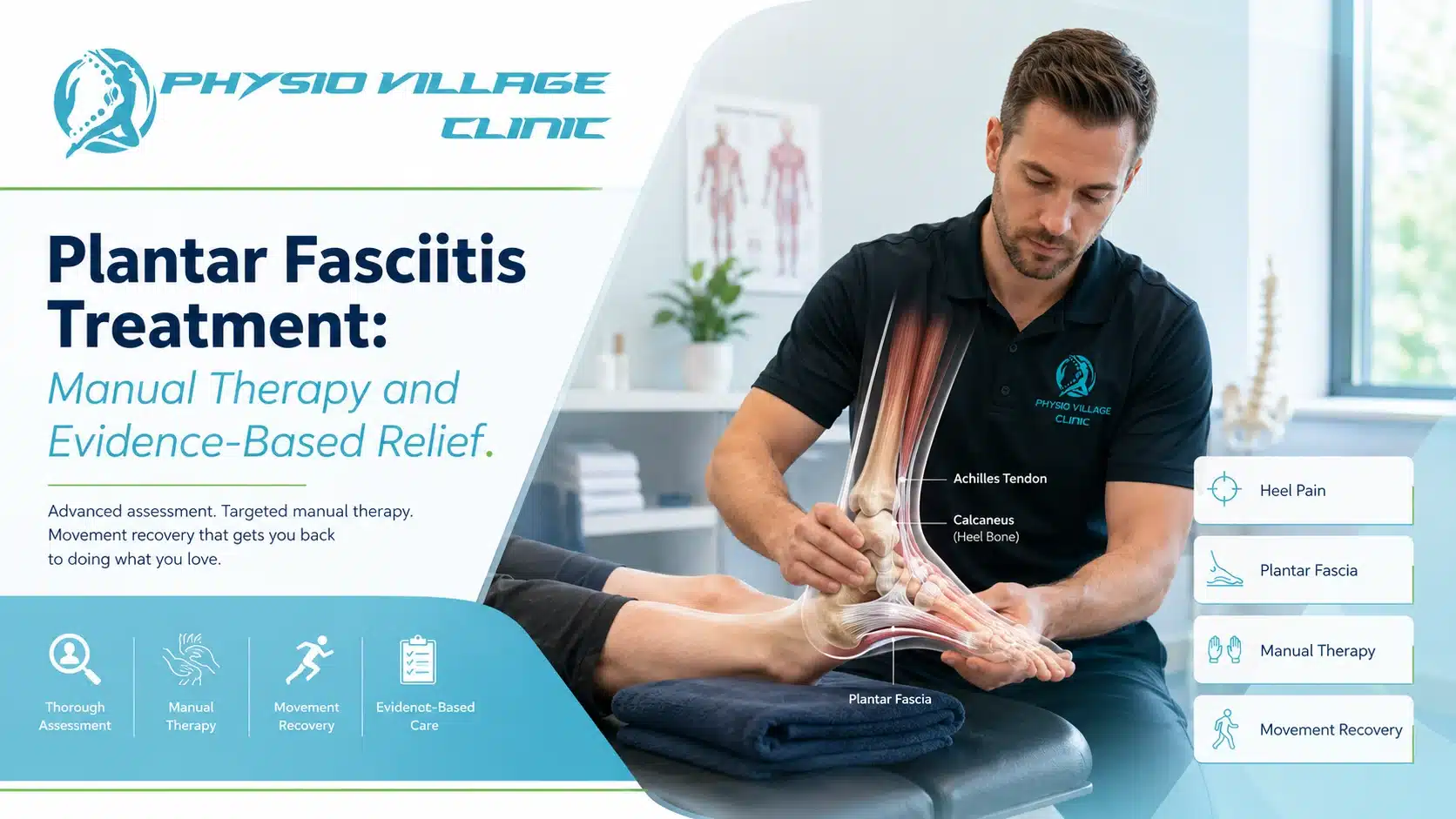
Plantar fasciitis typically develops when the plantar fascia is exposed to more load than it can tolerate over time. Common contributing factors include:
- A sudden increase in activity — Particularly walking or running distance without adequate preparation
- Poor footwear — Shoes lacking appropriate arch support or cushioning
- Tight calf muscles and Achilles tendon — Restricted ankle dorsiflexion places greater demand on the plantar fascia
- Reduced foot and ankle mobility
- Overpronation (excessive inward rolling of the foot)
- High-impact activity on hard surfaces
- Prolonged time on your feet — Occupations involving extended standing can contribute
- Body weight — Increased load through the foot accelerates tissue stress
Physiotherapy for Plantar Fasciitis
Physiotherapy is one of the most well-supported approaches for plantar fasciitis treatment. At Physio Village, our physiotherapists will assess your foot mechanics, calf and ankle flexibility, lower limb strength, and footwear before designing a treatment plan.
Manual Therapy
Hands-on techniques applied to the foot, ankle, and calf can help:
- Reduce tension and stiffness in the plantar fascia itself
- Improve ankle and subtalar joint mobility
- Release tight calf and soleus muscles that contribute to the problem
Manual therapy is typically combined with a home exercise programme for best results.
Stretching and Exercise
Specific stretches and strengthening exercises are central to plantar fasciitis recovery. Key targets include:
- Plantar fascia stretches — Particularly effective when performed before taking the first steps of the day
- Calf and Achilles stretching — Improving ankle dorsiflexion reduces load on the plantar fascia
- Intrinsic foot muscle strengthening — Building the small muscles of the foot improves arch control and dynamic foot support
- Calf strengthening (including eccentric loading) — Supporting the Achilles-calf-plantar fascia system
Load Management and Activity Modification
One of the most important aspects of plantar fasciitis treatment is learning how to manage activity load so the tissue can recover without complete rest. Your physiotherapist will help you identify which activities are appropriate to continue, which to modify, and how to gradually return to full activity as your symptoms improve.
Taping
Low-Dye or arch taping can be used to provide temporary offloading of the plantar fascia, particularly during the early stages of treatment or when transitioning back to higher levels of activity. Your physiotherapist can apply this in the clinic and teach you how to apply it yourself.
Orthotic Assessment
If your foot mechanics are contributing to plantar fasciitis, your physiotherapist may recommend a foot orthotic assessment. Orthotics can help modify the way load is distributed across the foot, which may reduce strain on the plantar fascia over time.
Heel Spur vs. Plantar Fasciitis — What Is the Difference?
Many patients with plantar fasciitis are told they also have a heel spur — a calcium deposit that can develop where the plantar fascia attaches to the heel bone. Heel spurs are often detected on X-ray and can cause concern, but it is important to know that heel spurs are often asymptomatic and are frequently found in people without any heel pain.
The plantar fascia inflammation and dysfunction, rather than the spur itself, is typically the primary driver of pain. Treatment approaches for plantar fasciitis are generally appropriate for both conditions.
Plantar Fasciitis Treatment in Brampton and Oakville
Physio Village provides assessment and treatment for plantar fasciitis and related heel pain conditions at our Brampton and Oakville clinics. If heel pain is affecting your ability to walk, run, work, or exercise, our registered physiotherapists can help you understand what is driving your symptoms and develop a realistic plan to address it.
Book Your Plantar Fasciitis Assessment
You do not have to accept foot pain as part of your routine. A physiotherapy assessment can help identify the cause of your heel pain and get you on a clear path toward recovery.
Book Your Appointment
Oakville Clinic: Book Oakville Clinic
Brampton Clinic: Book Brampton Clinic
FAQ: Plantar Fasciitis
Q1: How long does plantar fasciitis take to heal?
Plantar fasciitis can take anywhere from a few weeks to several months to resolve, depending on how long symptoms have been present, the underlying contributing factors, and how consistently treatment is followed. Early physiotherapy assessment and adherence to a structured programme are associated with better outcomes.
Q2: Should I keep walking on plantar fasciitis?
In most cases, complete rest is not necessary or advisable. Staying active within your pain tolerance — and modifying rather than eliminating activity — is generally the preferred approach. Your physiotherapist can guide you on activity levels that are appropriate for your stage of recovery.
Q3: Does stretching really help plantar fasciitis?
Yes — targeted stretching, particularly of the plantar fascia and calf muscles, is one of the most consistently supported self-management strategies for plantar fasciitis. The timing and technique matter, so your physiotherapist will guide you on which stretches are most appropriate.
Q4: Are custom orthotics necessary for plantar fasciitis?
Custom orthotics can be helpful for some patients, particularly when foot mechanics are significantly contributing to the problem. However, they are not necessary for everyone. A physiotherapy assessment can help determine whether orthotics are appropriate for your situation.
Q5: Can plantar fasciitis come back?
Yes, recurrence is possible, particularly if the contributing factors (footwear, activity load, muscle tightness) have not been fully addressed. A comprehensive physiotherapy programmer that includes education and prevention strategies aims to reduce the likelihood of recurrence.