

Osteoarthritis is the most common form of arthritis in Canada, and it is particularly prevalent among adults over 50 — though it can develop at any age following joint injury or with prolonged joint stress. If you have been told you have osteoarthritis, or if you are experiencing progressive joint stiffness, aching, and reduced range of motion, you are not alone — and there are physiotherapy approaches that may help.
At Physio Village, we provide evidence-informed osteoarthritis treatment for patients in Brampton and Oakville. This article explains what osteoarthritis is, how it progresses, what symptoms to watch for, and what a physiotherapy programme may involve.

What Is Osteoarthritis?
Osteoarthritis is a degenerative joint disease that occurs when the cartilage cushioning the ends of bones breaks down over time. As cartilage wears away, bones may begin to rub more closely together, leading to pain, stiffness, and inflammation. In some cases, bony outgrowths called osteophytes (bone spurs) can develop at the joint margins.
Osteoarthritis most commonly affects:
- The knees (particularly in weight-bearing activities)
- The hips
- The hands and fingers
- The cervical spine (neck)
- The lumbar spine (lower back)
Osteoarthritis Symptoms — What to Look For
Osteoarthritis symptoms tend to develop gradually and can include:
- Aching joint pain that worsens with activity and improves with rest (in earlier stages)
- Morning stiffness that typically eases within 30 minutes
- A feeling of grinding, clicking, or grating within the joint
- Swelling around the joint after activity
- Reduced range of motion over time
- Tenderness when pressing on the joint area
- Muscle weakness around the affected joint
Symptoms often fluctuate. Cooler, damper weather can increase discomfort for some people. If you are noticing progressive changes in your joint function, an assessment is a sensible next step.
What Causes Osteoarthritis?
Osteoarthritis is multifactorial — meaning several factors typically contribute. The most commonly identified include:
- Age — Cartilage becomes less resilient and less able to repair itself as we age
- Previous joint injury — Even injuries that appeared to heal well can increase long-term osteoarthritis risk
- Excess body weight — Particularly relevant for knee and hip osteoarthritis, as increased load accelerates cartilage breakdown
- Genetics — A family history of osteoarthritis increases susceptibility
- Occupational or recreational joint stress — Repetitive impact, heavy lifting, or prolonged kneeling
- Muscle weakness — Particularly in the muscles surrounding the knee, hip, or spine, which normally absorb and distribute joint load
Physiotherapy for Osteoarthritis — What the Evidence Supports
Physiotherapy is widely recommended as a core component of osteoarthritis management. Research supports its role in reducing pain, improving joint function, and slowing the progression of activity limitation. At Physio Village, our approach to osteoarthritis treatment is practical, individualized, and focused on your daily function goals.
Manual Therapy for Osteoarthritis
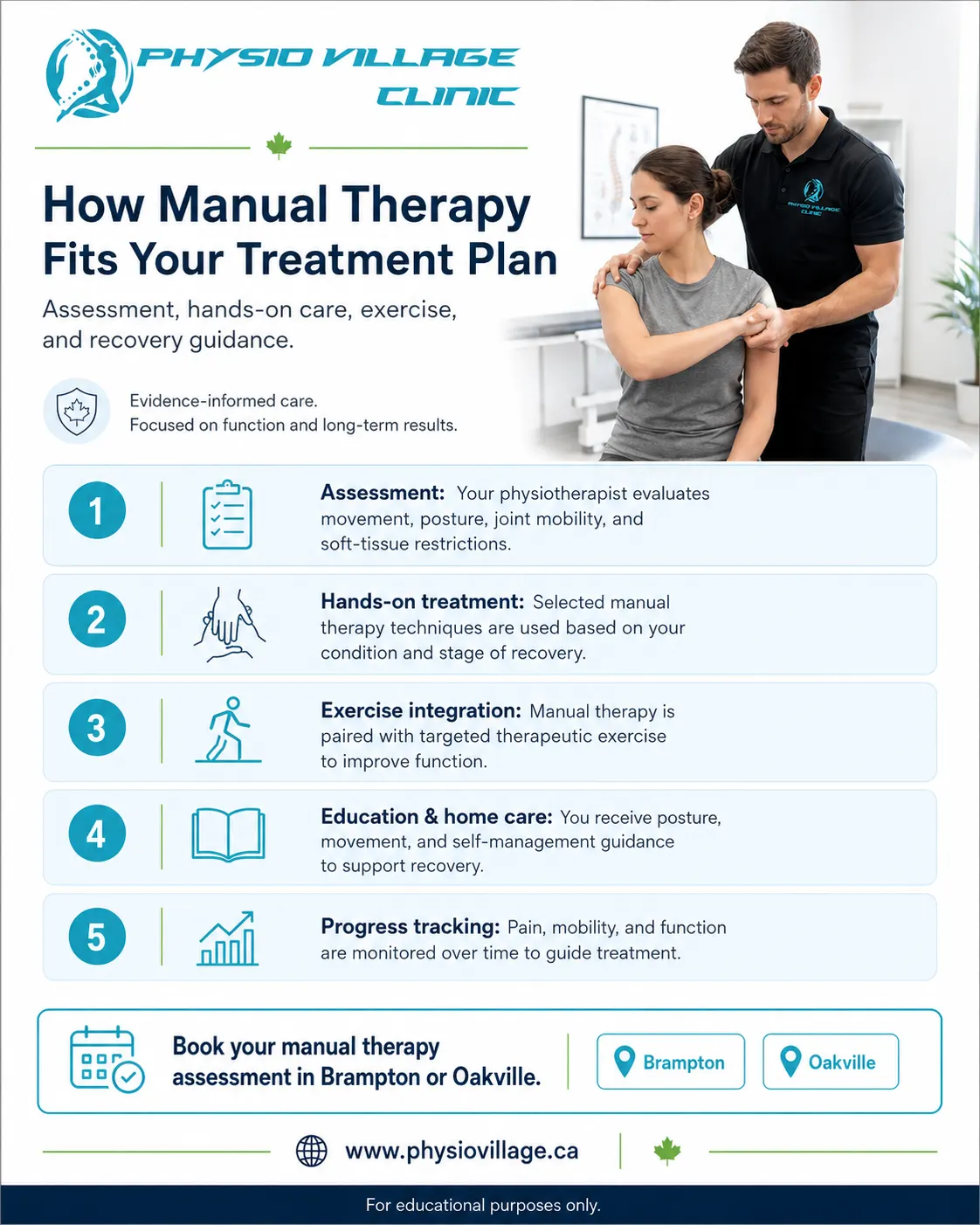
Manual therapy techniques can help reduce stiffness, improve joint mobility, and ease pain in osteoarthritic joints. Techniques are carefully selected and applied based on the affected joint and stage of degeneration. For arthritis in the knees or hips, manual therapy may also address related dysfunction in the surrounding muscles and fascia.
Targeted Strengthening Exercise
One of the most well-supported interventions for osteoarthritis is strengthening the muscles that support and protect the affected joint. For knee osteoarthritis, for example, quadriceps and hip abductor strength are consistently associated with better outcomes. Your physiotherapist will prescribe exercises that are appropriate for your current strength level and joint tolerance.
Flexibility and Range of Motion Work
Maintaining flexibility in and around the affected joint can help reduce pain and improve ease of movement in daily activities. Stretching and range of motion exercises are selected based on which joint is affected and what movement deficits are identified in your assessment.
Education and Load Management
Understanding how to pace your activities, modify tasks that place excessive stress on affected joints, and make informed decisions about when and how much to move is central to osteoarthritis management. Your physiotherapist will provide practical, personalized guidance on activity modification without encouraging avoidance of meaningful activity.
Assistive Devices and Bracing
For some patients with knee or hip osteoarthritis, an appropriate brace or orthotic support may reduce joint load and improve comfort during activity. Your physiotherapist can assess whether this type of support is appropriate for your situation.
Osteoarthritis in the Knees — A Closer Look
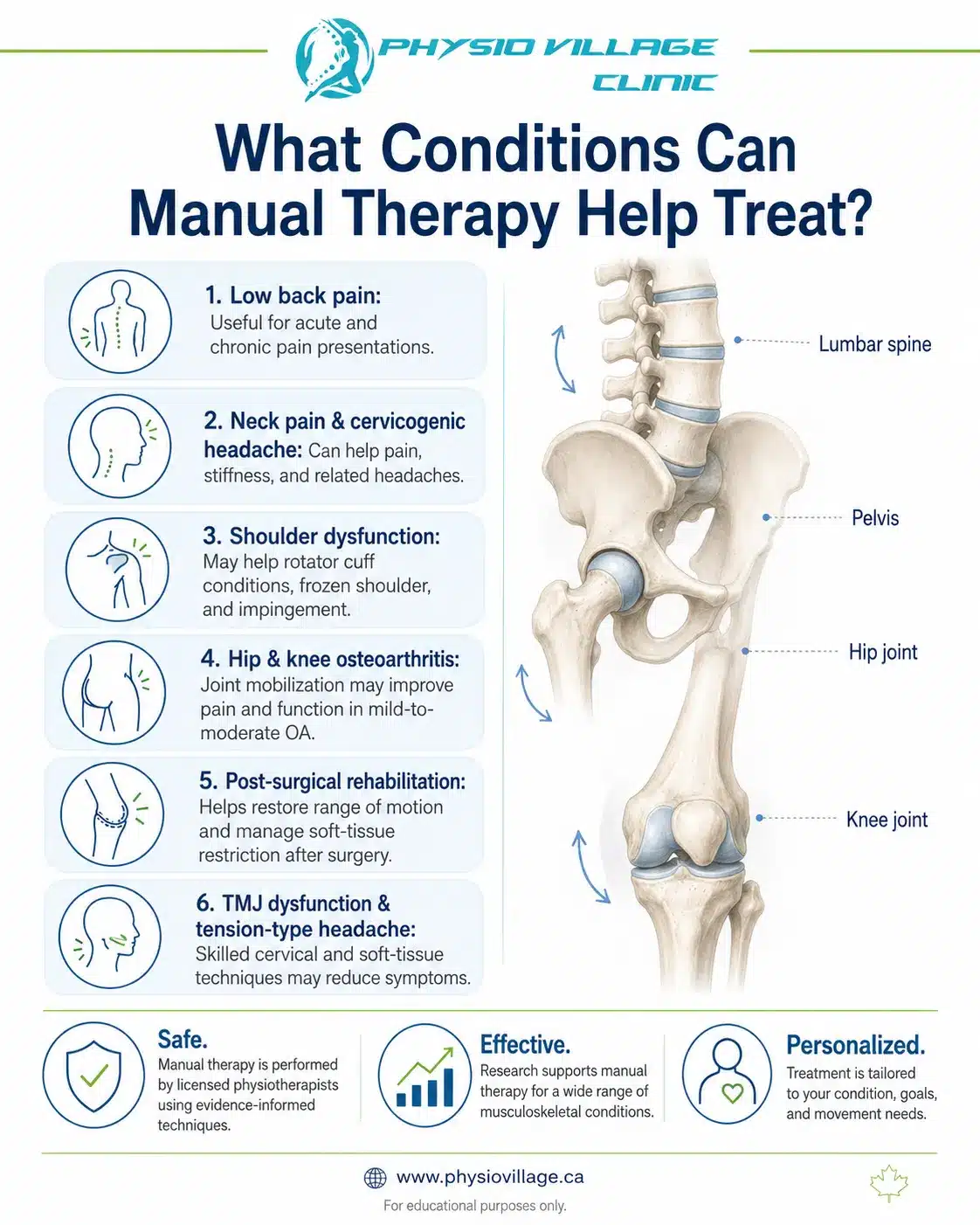
Knee osteoarthritis is one of the most frequently treated conditions in physiotherapy. Patients often report:
- Pain going up and down stairs
- Difficulty rising from a chair
- Knee pain after walking for extended periods
- Stiffness after sitting for a while
A physiotherapy programme for knee osteoarthritis typically focuses on quadriceps strengthening, improving hip stability, optimizing walking mechanics, and reducing pain through manual therapy and movement. Many patients report meaningful improvements in their ability to perform daily activities.
Osteoarthritis Treatment in Brampton and Oakville
Physio Village serves patients across Brampton and Oakville who are managing osteoarthritis at various stages. Whether your symptoms are mild and manageable or are beginning to affect your independence and quality of life, our registered physiotherapists can help you develop a practical and sustainable management plan.
Take the Next Step — Book Your Osteoarthritis Assessment
Osteoarthritis is a manageable condition, and physiotherapy can play a meaningful role in helping you stay active and comfortable. Book an appointment at Physio Village in Brampton or Oakville to speak with a registered physiotherapist about your joint health.
Book Your Appointment
Oakville Clinic: Book Oakville Clinic
Brampton Clinic: Book Brampton Clinic
FAQ: Osteoarthritis
Q1: Is osteoarthritis the same as “wear and tear” arthritis?
Osteoarthritis is often described this way because cartilage breakdown is a key feature. However, it is more accurately understood as a complex condition involving cartilage, bone, synovial tissue, and surrounding muscles. It is not an inevitable consequence of aging for everyone, and its progression can often be influenced by treatment and lifestyle factors.
Q2: Can osteoarthritis be reversed?
Currently, there is no treatment that reverses cartilage loss in osteoarthritis. However, symptoms can often be significantly improved through physiotherapy, appropriate exercise, and lifestyle modifications. Many people continue to live active and comfortable lives with osteoarthritis through good management.
Q3: Is walking good for osteoarthritis?
Walking is generally beneficial for most people with osteoarthritis, particularly of the knees and hips. It helps maintain joint lubrication, muscle strength, and overall health. The appropriate amount and intensity will depend on your individual situation, which your physiotherapist can help you navigate.
Q4: Will I eventually need surgery for osteoarthritis?
Not necessarily. Many people manage osteoarthritis effectively without surgery for many years. Surgery such as joint replacement is considered when conservative treatments have not produced adequate relief and quality of life is significantly affected. Physiotherapy is a core part of the conservative management pathway.
Q5: Can physiotherapy help after a joint replacement?
Yes. Physiotherapy is an important part of recovery following joint replacement surgery. It helps restore strength, mobility, and confidence, and your physiotherapist will guide you through a progressive rehabilitation programme.