
Chronic pain affects an estimated 8 million Canadians — that’s roughly one in five people living with pain that persists beyond three months. It is one of the leading causes of disability in this country and has a profound impact on mental health, relationships, productivity, and quality of life. And yet, many Canadians still manage chronic pain primarily through medication, missing the transformative potential of physiotherapy.
At Physio Village in Brampton and Oakville, our registered physiotherapists take a modern, evidence-based approach to chronic pain — one that addresses both the physical and neurological dimensions of persistent pain.
Understanding Chronic Pain: Why It’s Not Just in Your Head (or Your Tissues)
One of the most important advances in pain science over the past two decades is our understanding that chronic pain is not simply a signal of ongoing tissue damage. In many cases, the original injury has healed — but the nervous system has become sensitized, continuing to generate pain signals even in the absence of a clear structural problem.
This is called central sensitization, and it explains why chronic pain often doesn’t correlate neatly with what imaging shows. Your MRI may look relatively normal, yet you experience significant pain. This is not a sign that your pain is imaginary — it is a sign that your nervous system has adapted in a way that requires a specific therapeutic approach.
How Physiotherapy Addresses Chronic Pain
Pain Neuroscience Education
Understanding pain is one of the most powerful tools for managing it. Physiotherapists trained in pain neuroscience education (PNE) help patients understand the biology of chronic pain — how sensitization occurs, what factors amplify or reduce pain signals, and how movement and lifestyle choices influence the nervous system. Research shows that this knowledge alone can significantly reduce pain intensity and disability.
Graded Exercise and Movement Therapy
People with chronic pain often avoid movement out of fear of making things worse — a pattern called kinesiophobia. This avoidance leads to deconditioning, muscle weakness, joint stiffness, and increased pain sensitivity, creating a vicious cycle. Graded exercise therapy breaks this cycle by progressively and systematically reintroducing movement in a safe, controlled manner.
At Physio Village, we develop personalized exercise programs calibrated to your current capacity and gradually progressed toward your functional goals — whether that’s returning to gardening, resuming recreational sports, or simply walking without pain.
Manual Therapy and Soft-Tissue Techniques
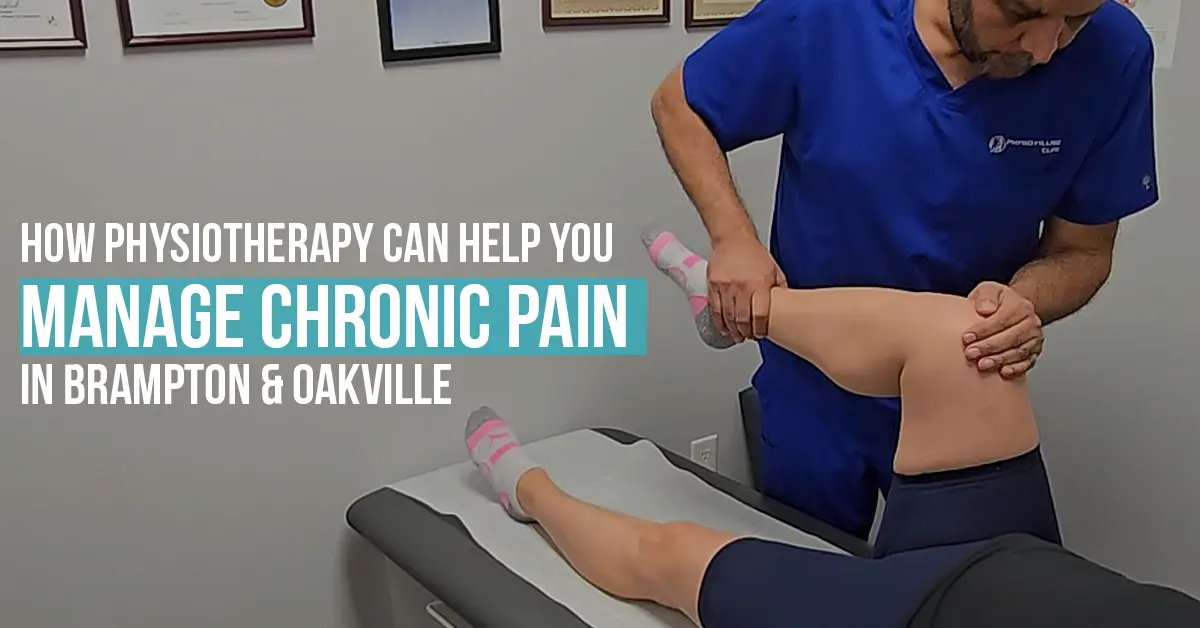
Hands-on treatment can modulate the nervous system’s pain response, reduce muscle tension, and improve joint mobility. Our physiotherapists use a range of manual therapy techniques — including joint mobilization, soft-tissue release, and myofascial techniques — to reduce local pain and improve function.
Dry Needling and Acupuncture
For patients with trigger points or widespread muscle tension contributing to chronic pain, dry needling and acupuncture can provide meaningful relief by targeting specific neural pathways and reducing muscle hypertonicity.
Collaboration with Your Healthcare Team
Chronic pain management is most effective when it’s integrated. Our physiotherapists at Physio Village work collaboratively with family physicians, pain specialists, psychologists, and other allied health professionals to ensure your care is coordinated and comprehensive.
Common Chronic Pain Conditions Treated at Physio Village
- Chronic low back pain
- Fibromyalgia
- Chronic neck pain and headache
- Osteoarthritis (hip, knee, shoulder)
- Complex regional pain syndrome (CRPS)
- Chronic pelvic pain
- Post-surgical chronic pain
If chronic pain has been limiting your life, know that there is a path forward. Book a chronic pain assessment in Brampton or Oakville with our experienced physiotherapy team.
Ready to book your appointment?
📍 Brampton Clinic: Book Now – Brampton
📍 Oakville Clinic: Book Now – Oakville