
lower back pain relief is one of the most prevalent health conditions worldwide — and one of the leading reasons Canadians visit their physiotherapist. Whether your lower back pain came on suddenly after lifting something awkwardly, or has been building gradually over months of desk work and poor posture, finding effective, lasting relief requires more than rest or painkillers alone.
At Physio Village in Brampton and Oakville, our registered physiotherapists take a thorough, individualized approach to lower back pain. This article outlines common causes, the difference between acute and chronic presentations, and the evidence-based strategies that may help you move better and hurt less.
Understanding Lower Back Pain

The lower back, or lumbar region, is a complex structure involving five vertebrae (L1–L5), intervertebral discs, multiple layers of muscle, ligaments, and a network of nerves — including the sciatic nerve. Given how much load and movement this region is responsible for, it is perhaps unsurprising that it is so commonly affected by pain.
Lower back pain is broadly divided into two categories:
Acute Lower Back Pain
Acute lower back pain comes on suddenly and typically has a recent identifiable trigger — such as a heavy lift, a sudden twist, or a fall. It is usually intense in the early days but often improves significantly within a few weeks with appropriate management.
Chronic Lower Back Pain
Chronic lower back pain persists beyond 12 weeks and can be more complex to manage. It may involve ongoing structural issues, central sensitization (where the nervous system becomes more reactive to pain signals), or a combination of physical, lifestyle, and psychological contributors. Chronic back pain benefits from a comprehensive physiotherapy approach that addresses multiple contributing factors.
Common Causes of Lower Back Pain

Lower back pain can arise from a wide range of sources. Identifying the most likely cause is an important part of effective treatment. Common contributors include:
- Muscle strain or ligament sprain — The most frequent acute cause; overloaded or overstretched structures in the lumbar region
- Disc herniation or bulge — When disc material protrudes and presses on surrounding nerves, it can cause both local and referred leg pain
- Lumbar facet joint irritation — The small joints at the back of the spine can become inflamed or restricted, often from postural overload
- Spinal stenosis — Narrowing of the spinal canal that places pressure on the spinal cord or nerve roots, more common in older adults
- Degenerative disc disease — Gradual disc dehydration and reduced disc height over time
- Poor posture and prolonged sitting — Sustained lumbar flexion places cumulative load on spinal structures
- Core muscle weakness — Inadequate support of the lumbar spine during movement
- Stress and poor sleep — Both can lower pain thresholds and contribute to chronic lower back pain
Evidence-Based Approaches for Lower Back Pain Relief
Current evidence strongly supports active, physiotherapy-based approaches for lower back pain over prolonged rest or passive treatment alone. At Physio Village, lower back pain management is individualized and typically involves some combination of the following:
Manual Therapy
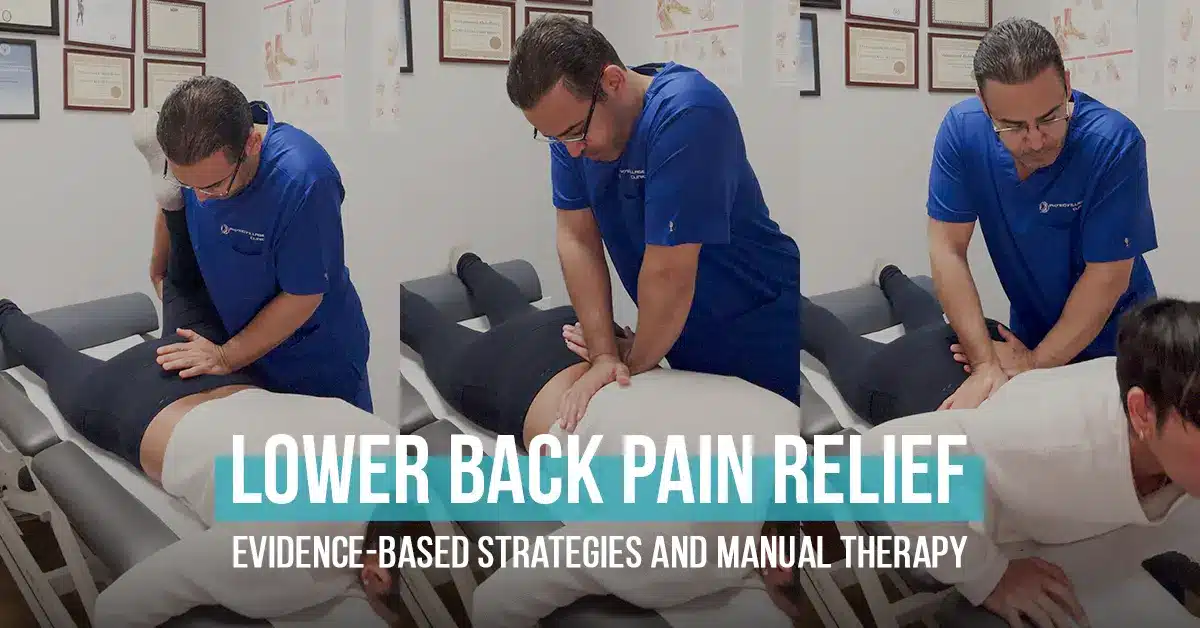
Hands-on physiotherapy can provide meaningful relief for many presentations of lower back pain. Techniques may include:
- Lumbar joint mobilization — Gentle, graded movement of the lumbar facet joints to reduce stiffness and pain
- Soft tissue techniques — Releasing tension in the lumbar paraspinals, gluteal muscles, and hip flexors
- Thoracic manipulation or mobilization — The thoracic spine significantly influences lumbar loading, and addressing stiffness in this region can relieve lower back symptoms
Therapeutic Exercise
Exercise is one of the most consistently supported interventions for lower back pain. Your programme may include:
- Core stabilization — Activating the deep stabilizing muscles (transversus abdominis, multifidus) that support the lumbar spine
- Lumbar mobility exercises — Restoring normal range of motion in all directions
- Hip and glute strengthening — Reducing compensatory lumbar loading
- Posture and movement retraining — Learning to move more efficiently during daily tasks
Education and Pain Science
Understanding your back pain — why it is there, what it means, and what is likely to help — is itself a therapeutic intervention. Research shows that patients who understand their pain science tend to recover more effectively and are less likely to develop chronic presentations.
Your physiotherapist will explain your findings clearly and provide guidance on activity modification, posture, ergonomics, and how to self-manage flare-ups.
Acupuncture and Dry Needling
For appropriate patients, acupuncture or dry needling may be incorporated into a broader lower back pain treatment plan, particularly for managing muscle tension, reducing pain sensitivity, and supporting recovery.
Back Pain Management for Desk Workers in Brampton and Oakville

A significant portion of lower back pain presentations at Physio Village are related to sedentary work — long hours at a desk, poor workstation setup, and insufficient movement throughout the day. Our physiotherapists regularly work with patients in Brampton and Oakville to address ergonomic contributors, prescribe movement breaks, and develop exercise habits that protect the lumbar spine during extended periods of sitting.
If you work at a desk and are experiencing lower back tension, even a single physiotherapy consultation can provide valuable guidance on workstation setup and daily habits.
Chronic Lower Back Pain — A Different Approach
Chronic lower back pain often requires a broader approach than acute pain. In addition to manual therapy and exercise, effective management may involve:
- Pacing strategies to avoid boom-and-bust activity cycles
- Sleep hygiene advice, since poor sleep significantly impacts pain experience
- Mindfulness and relaxation strategies for reducing pain sensitivity
- Graduated return to activities that have been avoided due to fear or habit
Physio Village takes a compassionate, patient-centered approach to chronic lower back pain. We recognize that persistent pain can be frustrating and emotionally draining, and we are here to help you move forward at a pace that makes sense for you.
Book Your Lower Back Pain Assessment at Physio Village
If lower back pain is limiting your daily life, a physiotherapy assessment can be a meaningful first step. Our registered physiotherapists in Brampton and Oakville will take the time to understand your specific situation and build a plan that supports real, lasting improvement.
Book Your Appointment
Oakville Clinic: Book Oakville Clinic
Brampton Clinic: Book Brampton Clinic
FAQ: Lower Back Pain Relief
Q1: How quickly can I expect lower back pain relief from physiotherapy?
This depends on the nature and duration of your pain. Some patients notice improvement within the first few sessions; others with chronic presentations may take longer. Your physiotherapist will provide realistic expectations based on your assessment and track your progress over time.
Q2: Is it safe to exercise with lower back pain?
For most types of lower back pain, appropriate movement and exercise are beneficial rather than harmful. Complete rest is rarely recommended. Your physiotherapist will design an exercise programme that is safe and appropriate for your specific presentation.
Q3: Do I need imaging (X-ray or MRI) before starting physiotherapy?
In most cases, imaging is not required before beginning physiotherapy for lower back pain. Clinical assessment is usually sufficient to guide initial treatment. If imaging is indicated, your physiotherapist will advise accordingly and coordinate with your physician.
Q4: Can lower back pain be a sign of something serious?
In rare cases, lower back pain can be associated with conditions that require urgent medical attention — known as “red flags.” These include unexplained weight loss, fever, loss of bladder or bowel control, or pain that is severe and constant without any position providing relief. If you experience these symptoms, please seek medical attention promptly.
Q5: Can posture changes help reduce lower back pain?
Yes — postural habits and ergonomics play a meaningful role in lower back pain for many patients. However, there is no single “perfect posture,” and the ability to move comfortably through a range of positions is generally more important than maintaining one static position. Your physiotherapist can give personalized guidance.