
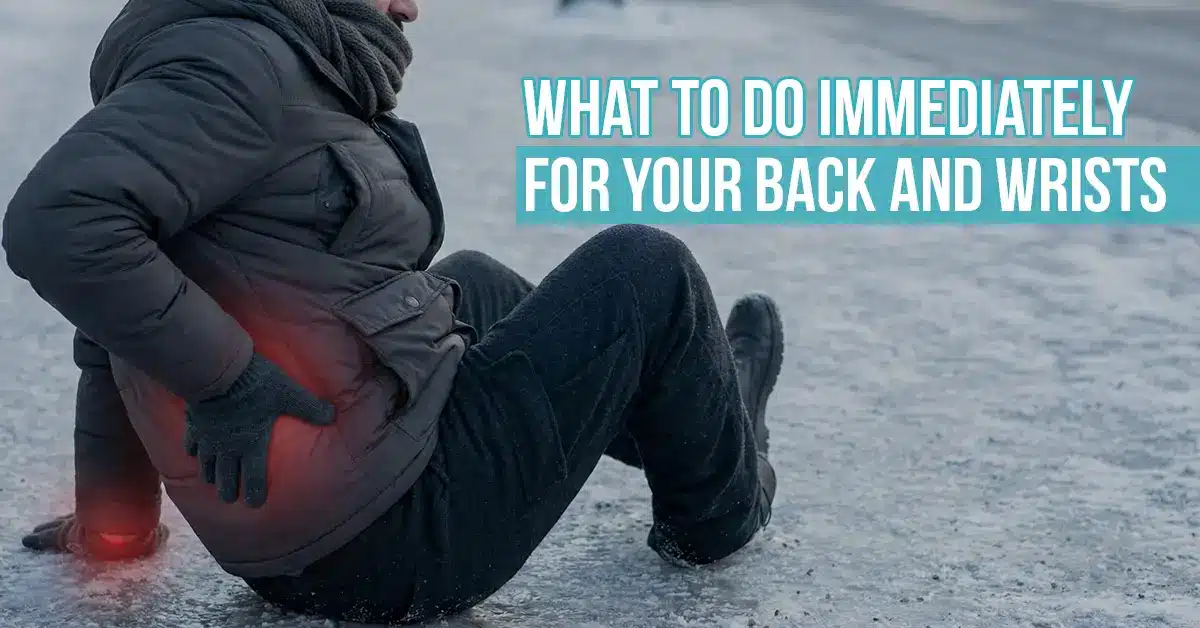
Ontario winters are beautiful, but they come with a hidden danger: black ice. Whether you were walking to your car in Brampton or heading into a shop in Oakville, a sudden slip can happen in a split second.
When you hit the icy pavement, your body’s natural instinct is to protect itself, often leading to jarring impacts on your spine or wrists. As a Registered Physiotherapist, I see a significant spike in these injuries every winter. Knowing what to do in the first 24 hours can make the difference between a quick recovery and chronic pain.
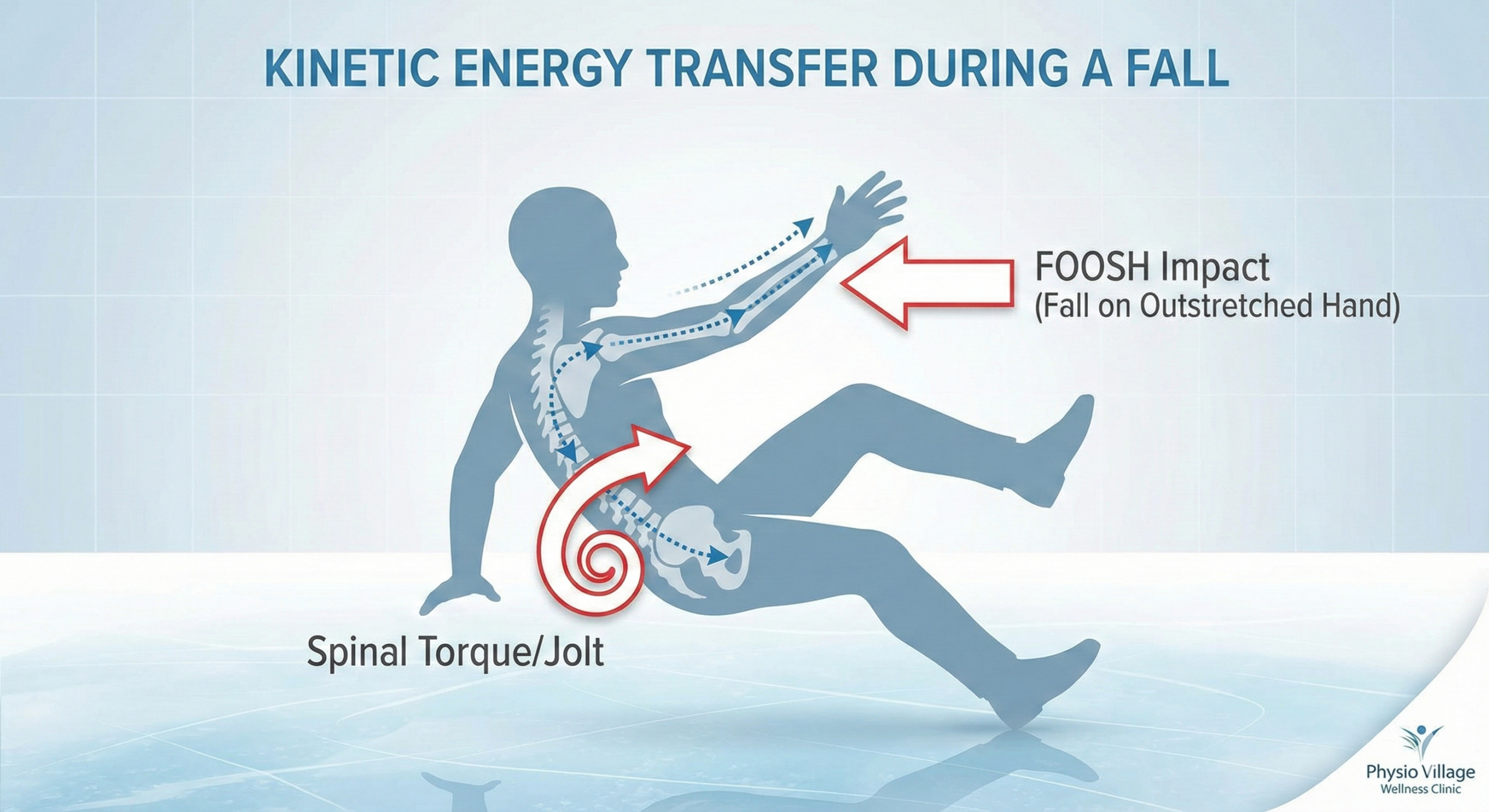
1. The “FOOSH” Injury (Fall On Outstretched Hand)
Most people try to break their fall by putting their hands out. In the clinical world, I call this a FOOSH injury.
- The Impact: This sends a massive shockwave from your wrist up to your elbow and shoulder.
- What to watch for: If you have swelling, bruising, or a “weak” grip the next morning, you may have more than just a bruise. Ligament tears in the wrist are often missed but can lead to long-term instability if not treated with professional manual therapy.
2. The Spinal “Jolt”
Even if you don’t land on your back, the sudden “twisting” motion as you try to regain your balance can overstretch the muscles and ligaments in your lumbar spine.
- The Impact: This often leads to “delayed” pain. You might feel fine right after the fall due to adrenaline, but wake up the next morning unable to bend over or sit comfortably.
- The Risk: A slip can aggravate an underlying disc issue or cause a painful muscle spasm that locks up your back.
Immediate First Aid: The 24-Hour Rule
If you’ve just fallen, follow these steps immediately:
- Assess the Extremities: Can you move your fingers and toes? Is there any obvious deformity? If yes, head to the nearest GTA emergency room.
- Ice, Don’t Heat (Initially): For the first 24–48 hours, use ice packs for 15 minutes at a time to reduce acute inflammation. Avoid hot baths immediately after a fall, as heat can sometimes increase swelling in a fresh injury.
- Gentle Movement: Avoid bed rest. Staying completely still can cause back muscles to stiffen. Try walking very gently around your home.

When to See a Physiotherapist in Brampton or Oakville
Many residents try to “tough it out,” but waiting too long can lead to scar tissue and improper healing. You should book an in-person assessment if:
- Your wrist pain doesn’t improve after 48 hours of rest.
- You feel “clicking” or “catching” in your wrist or back.
- Pain radiates down your leg (sciatica) or into your fingers.
- You are relying on over-the-counter painkillers just to get through the day.
Why In-Person Care is Essential
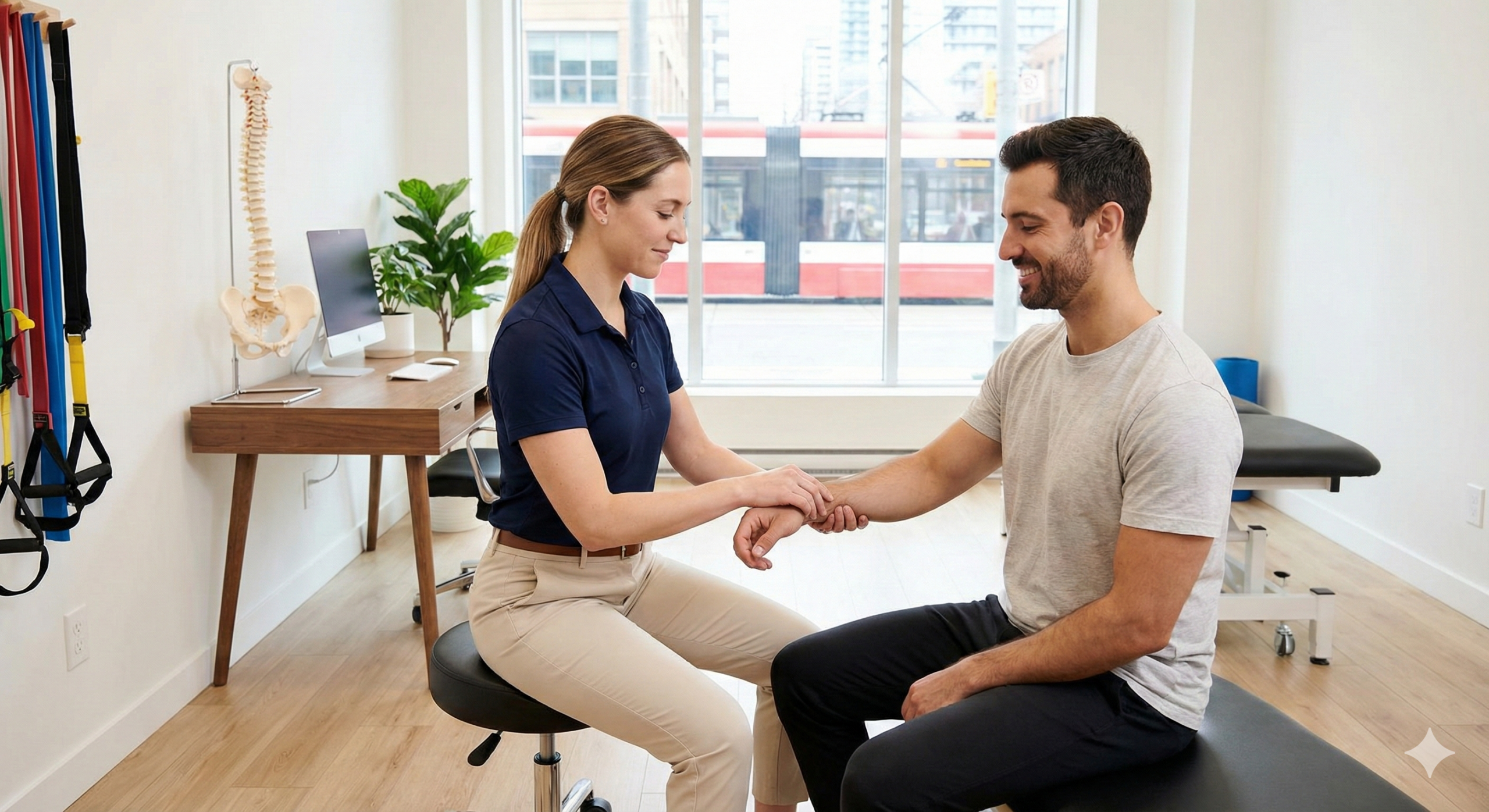
At Physio Village Clinic, I don’t believe in “one-size-fits-all” recovery. I provide a hands-on clinical exam to check your joint alignment and nerve function. Whether you need manual mobilization for a stiff wrist or targeted decompression for a jolted back, an in-person visit ensures the treatment is tailored to your specific injury.
Don’t let a winter slip linger into spring.
Book Your Assessment at our Brampton or Oakville Location Today
Medical Disclaimer: This content is for informational purposes only. If you suspect a fracture or have severe neurological symptoms, please visit an urgent care centre or hospital immediately.
