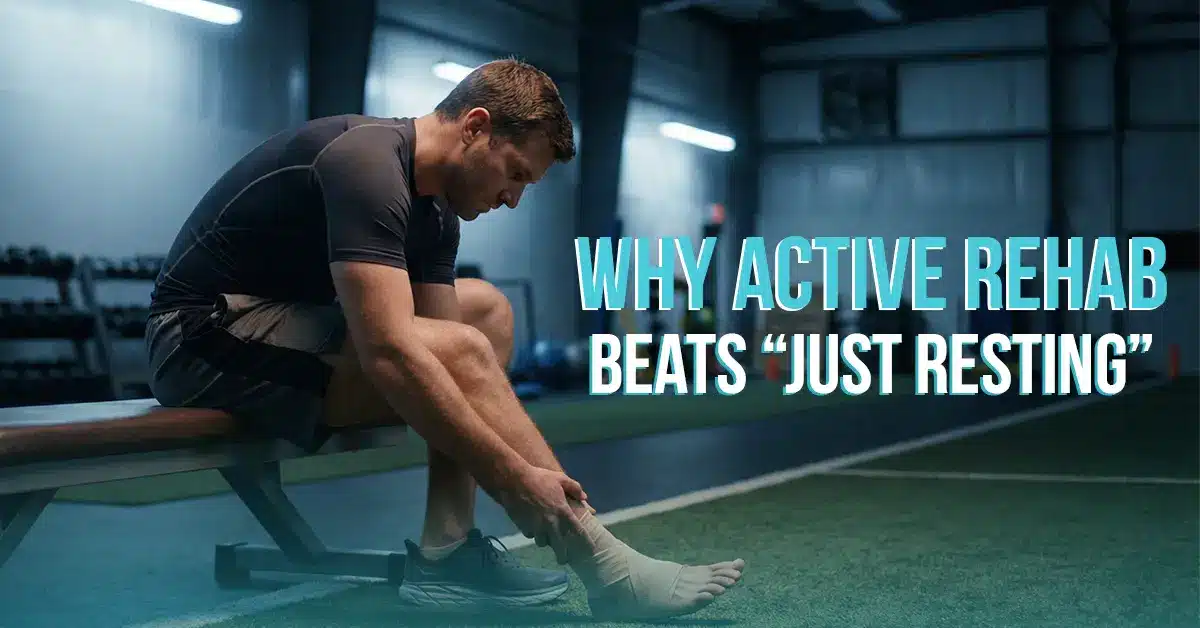
Stuck on the sidelines? Here is why waiting for your injury to heal on its own—instead of seeking proper Sports Injury Rehabilitation—might be the reason you aren’t getting better. You twisted your ankle during a Sunday league soccer game. Or maybe you felt a sharp ‘pop’ in your shoulder while pushing for a PR at the gym.
You twisted your ankle during a Sunday league soccer game. Or maybe you felt a sharp “pop” in your shoulder while pushing for a PR at the gym.
You hobble home, grab a bag of frozen peas, and tell yourself the standard lie: “I’ll just take two weeks off. I’ll rest, ice it, and it will be fine.”
Two weeks pass. You feel okay walking around the house. You decide to try a light jog or lift a warm-up weight. Snap. The pain is back instantly. Maybe it’s even worse than before.
Frustrating, right? You did everything “right.” You rested. You waited. So why is your body failing you?
Here is the hard truth that most generic clinics won’t tell you: Rest is not Rehab.
If you are an athlete—whether you play competitive hockey or just love your morning 5K run—waiting for a sports injury to heal passively is a recipe for muscle loss, stiffness, and recurring pain.
At PhysioVillage, we believe in Active Rehabilitation. This guide explains why the old “wait and see” approach is outdated, and how we get you back in the game stronger than before.
The Trap of “Wait and See” (The Problem with Rest)
For decades, the standard advice for Sports Injury Rehabilitation was the R.I.C.E method (Rest, Ice, Compression, Elevation).
While ice and rest are great for the first 24-48 hours to calm down swelling, relying on them for weeks is dangerous for an athlete.
Here is what happens to your body when you just “Rest”:
- Muscle Atrophy: Your muscles start to weaken after just days of inactivity. When you finally return to your sport, your muscles are too weak to support your joints, leading to re-injury.
- Scar Tissue Buildup: Without movement, your body repairs tissue in a messy, “clumped” way. This leads to stiffness and limited range of motion.
- Fear of Movement: The longer you sit on the couch, the more your brain becomes afraid to use that limb. This is called kinesiophobia.
Solution: You don’t need to stop moving. You need to move differently.
What is Active Rehab?
Active Rehab means using exercise and movement as medicine.
Instead of lying in bed waiting for the pain to vanish, we find the specific movements you can do without pain to stimulate healing.
Why Active Rehab wins every time:
- Increased Blood Flow: Movement pumps oxygen-rich blood to the injured tissue, speeding up repair.
- Better Tissue Alignment: When you stress a healing tendon or muscle correctly, the new fibers lay down in straight, strong lines (instead of a messy scar).
- Mental Health: You get to keep training. You maintain your routine, your endorphins, and your sanity.
How We Treat Sports Injuries at PhysioVillage
When you come to PhysioVillage for sports injury rehabilitation, don’t expect to just lie on a table with a heat pack for 30 minutes. We treat you like an athlete.
Here is our 3-step protocol:
Step 1: The Biomechanical Investigation
You might have Runner’s Knee, but is the knee the problem? Often, the knee is just the victim. The criminal might be a stiff ankle or a weak hip that is forcing your knee to collapse inward with every step.
- We don’t guess. We use movement screens and functional testing to find the “Weak Link” in your chain.
- We diagnose the root cause. We explain exactly why this happened, so you can stop it from happening again next season.
Step 2: Training Around the Injury
This is the part our athletes love the most. We rarely tell you to stop training completely.
If you have a shoulder injury, we can design a lower-body and core program that keeps your heart rate up and your legs strong. If you sprained your ankle, we can focus on upper body strength and non-weight-bearing cardio.
Our Goal: To ensure that when your injury heals, the rest of your body is still in peak condition.
Step 3: The “Return-to-Sport” Protocol
This is where the gap exists in most healthcare. Most doctors will clear you when you have “No Pain.” But “No Pain” does not mean “Game Ready.”
Walking without pain is very different from sprinting, cutting, tackling, or landing a jump. Before we clear you to play, we put you through rigorous Return-to-Sport Testing:
- Can you hop on one leg with stability?
- Can you absorb force when landing?
- Do you have the explosive power required for your position?
We simulate the demands of your sport in the safety of our clinic gym before we send you back to the field.
Common Sports Injuries We Treat
Whether you are a CrossFit enthusiast, a hockey player, or a weekend warrior, we have seen it all.
- Running Injuries: Shin splints, Plantar Fasciitis, Achilles Tendinopathy.
- Shoulder Pain: Rotator Cuff tears, Impingement (Swimmer’s Shoulder).
- Knee Pain: ACL rehab (pre and post-surgery), Patellofemoral Pain Syndrome.
- Elbows: Tennis Elbow and Golfer’s Elbow.
- Sprains & Strains: Ankle sprains, Hamstring pulls, Groin strains.
Why Choose PhysioVillage for Sports Rehab?
You wouldn’t take a Ferrari to a bicycle mechanic. So why take your athletic body to a generic clinic that only treats sedentary lifestyles?
- We Are Athletes Too: Our therapists understand the mindset of an athlete. We know you hate resting, and we respect your drive to compete.
- The Facility: We aren’t just treatment rooms. We have a fully equipped rehab gym to test your strength and movement properly.
- The Plan: You leave Day 1 with a plan. You will know exactly what to do in the gym, at home, and on the field to speed up your recovery.
Stop Waiting. Start Training.
Every day you spend “just resting” is a day you lose strength. Don’t let a nagging injury turn into a season-ending problem.
You don’t have to choose between healing and training. At PhysioVillage, you can do both.
Are you ready to get back to your Personal Best?